
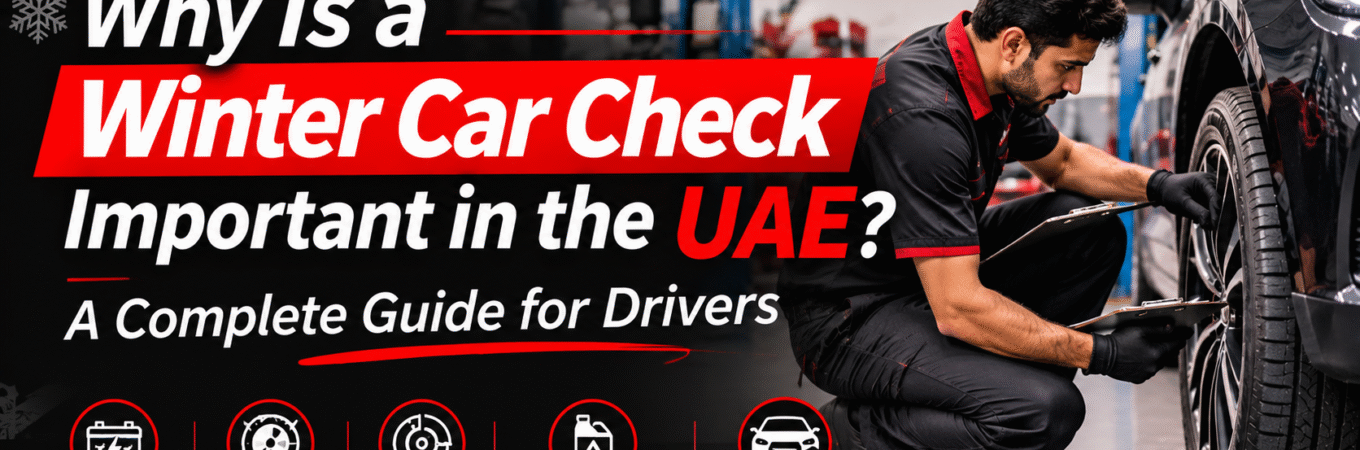
The UAE winter season is one of the best times to enjoy driving. With more comfortable temperatures, many residents plan weekend getaways, family outings, outdoor activities, and long road trips.
But before enjoying the season, there is one important question every car owner should consider:
Is your vehicle ready for winter driving?
Although the UAE does not experience extremely cold winters, seasonal vehicle maintenance is still important. Months of intense summer heat can place additional stress on essential vehicle components, including the battery, tyres, cooling system, rubber hoses, and other parts.
Some problems may not become noticeable until you start driving longer distances or using your vehicle more frequently.
A winter car check in the UAE helps identify these issues before they turn into unexpected breakdowns or expensive repairs.
In this guide, we explain why winter vehicle inspections matter, which components need attention, and how regular maintenance can help keep your car reliable throughout the season.
Why Is a Winter Car Check Important?
A winter car check is a preventive vehicle inspection carried out before or during the winter driving season.
It focuses on essential vehicle systems that affect reliability, safety, and performance.
For UAE drivers, the inspection is particularly useful because vehicles have already experienced several months of high temperatures.
A proper winter check can help:
- Identify battery deterioration.
- Detect tyre wear and pressure problems.
- Check brake system condition.
- Identify fluid leaks or low fluid levels.
- Inspect the engine cooling system.
- Check air conditioning performance.
- Identify visible wear in important components.
- Prepare the vehicle for longer journeys.
The main objective is to identify maintenance requirements early rather than waiting for a warning light or mechanical problem.
1. Summer Heat Can Affect Your Car Battery
Your car battery is one of the components that deserves attention after the UAE summer.
Many drivers associate battery problems with cold weather. However, prolonged exposure to high temperatures can also accelerate battery deterioration.
Heat can affect the battery’s internal chemical processes and contribute to faster ageing.
A battery may continue starting the vehicle normally even when its performance has started to decline.
Eventually, you may notice:
- Slow engine starting.
- Clicking sounds when starting.
- Dim headlights.
- Electrical system irregularities.
- Battery warning indicators.
- Frequent need for jump-starting.
A winter battery health check can help identify reduced battery performance before it causes an unexpected starting problem.
The charging system and battery terminals should also be inspected where necessary.
2. Tyre Condition Becomes Especially Important During Road Trips
Tyres play a major role in vehicle safety.
They affect braking, steering, handling, and overall road grip.
During the UAE summer, high road temperatures and incorrect tyre pressure can increase the stress placed on tyres.
Before winter road trips, it is important to check:
Tyre pressure: Ensure that all tyres are inflated according to the manufacturer’s recommendations.
Tread depth: Check whether the tyres have sufficient tread remaining.
Visible damage: Look for cracks, cuts, bulges, or other signs of deterioration.
Uneven wear: Irregular wear may indicate alignment, suspension, or tyre pressure issues.
Tyre age: Older tyres may deteriorate even when the tread appears acceptable.
Do not assume that changing weather automatically requires a different tyre pressure. Follow the vehicle manufacturer’s recommended pressure, usually specified for cold tyres.
A proper tyre inspection helps identify problems before they affect your driving.
3. Your Brakes Need Attention Before Long Drives
Your braking system is essential for controlling the vehicle and maintaining safe stopping performance.
Daily driving, frequent braking, and high temperatures can contribute to wear on brake components.
Before planning longer journeys, your brakes should be inspected for:
- Worn brake pads.
- Damaged or excessively worn brake discs.
- Brake fluid condition.
- Visible fluid leaks.
- Caliper-related problems.
- Unusual braking noises.
- Changes in brake pedal feel.
Some warning signs are easy to notice.
Squealing, grinding, vibration, or a longer stopping distance may indicate a braking issue.
A seasonal brake inspection can help identify wear before it becomes a more serious problem.
If the brake pedal suddenly feels soft or the vehicle’s braking performance changes significantly, arrange an immediate inspection. Do not continue driving if the brakes may be unsafe.
4. Check the Engine Cooling System After Summer
Even during winter, your engine needs a properly functioning cooling system.
The cooling system regulates engine temperature and helps prevent overheating.
Months of high-temperature operation can make it especially important to inspect the radiator, coolant hoses, connections, and other related components.
Important areas to check include:
- Coolant level.
- Coolant condition.
- Radiator condition.
- Coolant hoses.
- Expansion tank.
- Visible leaks.
- Related cooling system components.
Low coolant levels should never be ignored.
If your car has been losing coolant, showing temperature fluctuations, or displaying an engine temperature warning, it needs proper diagnosis.
Simply topping up coolant without identifying a leak may only provide a temporary solution.
5. Engine Oil and Other Fluids Need Regular Inspection
Vehicle fluids perform important functions throughout the car.
Engine oil lubricates moving engine components, while coolant helps regulate temperature. Brake fluid transfers hydraulic pressure through the braking system.
Other fluids support transmission, steering, and visibility systems, depending on the vehicle.
During a winter check, important fluids should be inspected for:
- Correct levels.
- Visible contamination.
- Signs of leakage.
- Maintenance interval requirements.
- Suitability for the vehicle.
Engine oil should be changed according to the manufacturer’s recommended mileage and time interval.
Do not assume that the arrival of winter automatically means you need a different engine oil. Always use the viscosity and specification recommended for your particular vehicle.
6. Check Your Car’s Air Conditioning System
Although the UAE winter is more comfortable, your car’s air conditioning system remains important.
A properly functioning AC system helps maintain cabin comfort throughout the year.
It can also help manage moisture inside the cabin and support demisting when humidity causes the windows to fog.
A winter AC inspection may include:
- Cooling performance.
- Cabin air filter condition.
- Airflow.
- Unusual noises.
- Visible refrigerant-related leaks.
- Compressor operation.
- Other AC system components.
If your AC was not cooling effectively during summer, winter is a good opportunity to identify the issue.
An AC problem may involve more than low refrigerant. The compressor, condenser, cooling fans, filters, electrical components, or other parts may require attention.
7. Inspect Rubber Hoses, Belts and Other Components
Your vehicle contains several rubber and flexible components that operate under demanding conditions.
These include hoses, belts, seals, and bushings.
Over time, heat, ageing, vibration, and normal use can cause deterioration.
During an inspection, technicians may look for:
- Cracked or swollen hoses.
- Loose connections.
- Worn drive belts.
- Damaged seals.
- Visible fluid leaks.
- Deteriorated rubber components.
A damaged hose or worn belt may lead to further mechanical problems if left unattended.
Identifying visible wear early can help you plan the required maintenance.
8. Check Lights, Wipers and Visibility
Clear visibility is essential for safe driving.
During winter, some drivers travel early in the morning or later in the evening. Weather conditions such as fog, dust, or rain can also affect visibility.
Your vehicle’s visibility-related components should be checked.
These include:
Headlights: Ensure that both headlights work correctly and provide adequate illumination.
Tail lights: Check that the rear lights are functioning.
Brake lights and indicators: Make sure other drivers can clearly see your signals.
Windscreen wipers: Inspect the blades for cracks, wear, or ineffective cleaning.
Washer fluid: Ensure that the reservoir contains the appropriate washer fluid.
Windscreen: Check for cracks or damage that may affect visibility.
These checks are simple but important before travelling.
9. Winter Is a Popular Time for Long Road Trips
The cooler months encourage many UAE residents to travel more frequently.
Weekend drives, family outings, camping trips, and inter-emirate journeys become more popular.
However, a vehicle that is used mainly for short daily commutes may not be fully prepared for a long-distance journey.
A pre-trip inspection helps identify potential issues before you travel.
Before a road trip, pay attention to:
- Battery condition.
- Tyre pressure and tread depth.
- Brake performance.
- Engine oil level.
- Coolant level.
- Lights and indicators.
- Windscreen wipers.
- AC performance.
- Spare tyre condition.
- Dashboard warning lights.
If your vehicle already has an unusual noise, warning light, fluid leak, or performance issue, have it checked before leaving.
10. Preventive Maintenance Can Help Avoid Expensive Repairs
One of the biggest advantages of a winter car check is early problem identification.
A small issue may be easier and less expensive to address when detected early.
For example:
- A weak battery can be identified before it fails completely.
- Uneven tyre wear can be investigated before the tyres require premature replacement.
- A coolant leak can be diagnosed before it contributes to engine overheating.
- Worn brake pads can be replaced before they damage other brake components.
- A deteriorating hose can be identified before it develops into a more serious leak.
Not every inspection finding requires immediate replacement.
However, knowing the condition of your vehicle helps you make informed maintenance decisions.
Is a Winter Car Check Necessary in Abu Dhabi?
Yes. A winter car check can be useful even though Abu Dhabi does not experience the freezing temperatures associated with some other countries.
The purpose is not simply to prepare the car for cold weather.
It is to assess the condition of vehicle components after the demanding summer season and prepare the car for increased seasonal driving.
High summer temperatures, daily traffic, long-distance travel, and normal component ageing all influence vehicle maintenance requirements.
A seasonal inspection is particularly useful if:
- Your car has not been serviced recently.
- You frequently drive long distances.
- Your battery is several years old.
- You have noticed unusual noises.
- Your tyres show uneven wear.
- Your vehicle has an existing warning light.
- You are planning a family road trip.
The inspection should always be based on the vehicle’s actual condition and manufacturer’s maintenance recommendations.
What Happens If You Skip a Winter Car Check?
Skipping a seasonal inspection does not automatically mean your car will develop a problem.
However, it may allow existing maintenance issues to go unnoticed.
A weakened battery, worn tyres, deteriorating hoses, or brake-related problems may continue until symptoms become more noticeable.
The risk becomes more significant when you depend on your vehicle for longer journeys.
Regular preventive maintenance helps you understand which components need attention and which are still in good condition.
It also gives you an opportunity to address problems at a convenient time rather than dealing with an unexpected breakdown.
Why Choose Aarya Auto for Your Winter Car Check?
Aarya Auto provides multi-brand automotive maintenance and repair services for drivers in Abu Dhabi.
With more than 17 years of automotive experience, Aarya Auto helps customers identify vehicle maintenance requirements and address mechanical and electrical issues.
Its services include:
- General car servicing.
- Battery inspection and replacement.
- Brake inspection and repair.
- Tyre-related services.
- Engine diagnostics.
- Cooling system maintenance.
- Car AC service and repair.
- Suspension and steering repairs.
- Preventive vehicle maintenance.
The focus is on understanding the condition of your vehicle before recommending the appropriate service.
A winter inspection can help identify maintenance requirements across essential vehicle systems, giving you a clearer picture of your car’s condition before the season’s journeys.
Get Ready with Aarya Auto’s Complete Winter Check Offer
Preparing your vehicle for winter does not have to be complicated.
Aarya Auto’s Complete Winter Check is designed to help drivers inspect essential vehicle components and identify maintenance requirements.
The inspection focuses on important areas such as:
- Battery.
- Tyres.
- Brakes.
- Fluids.
- And more.
Special Seasonal Offer: 20% OFF Selected Services</bold>
Take advantage of the seasonal promotion to address your vehicle’s maintenance needs.
Whether you use your car for everyday commuting or regular road trips, a timely inspection can help you stay prepared.
Contact Aarya Auto to confirm the offer details, inspection scope, and eligible services.
Frequently Asked Questions
1. Why is a winter car check important in the UAE?
A winter car check helps identify problems caused by prolonged summer heat, normal wear, and daily driving. It focuses on essential components such as the battery, tyres, brakes, fluids, and cooling system.
2. Do cars need winter servicing in Abu Dhabi?
Yes. Although Abu Dhabi has a relatively mild winter, seasonal vehicle inspections are useful for identifying wear after summer and preparing for increased driving and road trips.
3. Which car parts should be checked before winter?
Important components include the battery, tyres, brakes, engine oil, coolant, AC system, lights, windscreen wipers, hoses, and other essential vehicle systems.
4. Does summer heat affect car batteries in the UAE?
Yes. Prolonged high temperatures can accelerate battery deterioration. A battery health test can help identify reduced performance before the battery fails.
5. Should I check my tyres before a winter road trip?
Yes. Check tyre pressure, tread depth, tyre age, and visible damage. Also inspect the spare tyre and follow the vehicle manufacturer’s recommended pressure.
6. Is a winter car check the same as regular car servicing?
No. A winter check is a seasonal inspection focused on assessing important vehicle components. Regular servicing follows the manufacturer’s maintenance schedule and may include oil changes, filter replacements, and other scheduled work.
7. How often should I get my car inspected?
Follow your vehicle manufacturer’s service schedule. You should also arrange an inspection whenever you notice warning lights, unusual noises, fluid leaks, changes in performance, or other signs of a problem.
8. Does Aarya Auto offer a winter check discount?
Yes. Aarya Auto’s Complete Winter Check promotion offers 20% OFF selected services. Contact the workshop to confirm the eligible services and current offer terms.
9. Can a winter car check prevent breakdowns?
An inspection cannot guarantee that a breakdown will never happen. However, it can identify existing problems and maintenance requirements that might otherwise go unnoticed.
Final Thoughts
Winter is a great time to enjoy driving across the UAE. But before planning your next road trip, make sure your vehicle is ready.
The months of summer heat can affect batteries, tyres, rubber components, fluids, and other important vehicle systems. A seasonal inspection helps you understand their condition and identify maintenance needs early.
Do not wait for a breakdown or warning light before checking your car.
Get your vehicle inspected with Aarya Auto’s Complete Winter Check and enjoy 20% OFF selected services.
Prepare Your Car. Enjoy the Season. Drive with Confidence.