
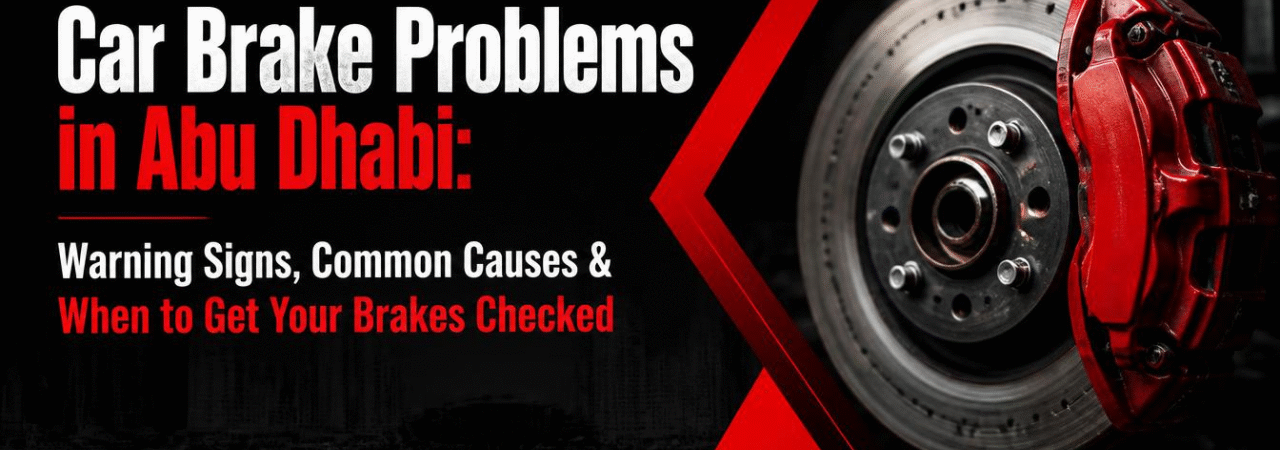
Your car’s braking system is one of its most important safety systems.
Whether you are driving through Abu Dhabi city traffic, cruising on Sheikh Zayed Bin Sultan Street, or travelling on the highway, you need your brakes to respond quickly and consistently.
Brake problems do not always start with a complete loss of braking. In many cases, your car gives you warning signs first. A squealing noise, vibration, soft brake pedal, pulling to one side, or longer stopping distance can indicate that something needs attention.
Understanding these signs can help you identify brake problems early and avoid more expensive repairs.
If you are experiencing car brake problems in Abu Dhabi, this guide explains the common causes, warning signs, brake maintenance requirements, and when you should have your vehicle inspected.
Why Are Brakes So Important?
A modern braking system consists of several components working together.
Depending on the vehicle, these can include:
- Brake pads
- Brake discs or rotors
- Brake calipers
- Brake fluid
- Brake lines
- Master cylinder
- ABS components
- Brake sensors
When you press the brake pedal, hydraulic pressure transfers force to the braking components at each wheel.
The brake pads press against the brake discs, creating friction that slows the wheels and brings the vehicle to a stop.
Because these components experience repeated heat, pressure, and friction, they naturally wear over time.
That makes regular brake service in Abu Dhabi an important part of vehicle maintenance.
10 Common Signs of Brake Problems
Brake problems can appear in different ways. Some symptoms require immediate attention, while others indicate that maintenance is due.
1. Squealing or Screeching Brakes
A high-pitched squealing noise when braking can be caused by worn brake pads, vibration between brake components, or other brake-related issues.
Some brake pads are designed with wear indicators that create a noise when the pad material becomes low.
However, not every brake noise means the pads are worn out.
Dust, moisture, surface corrosion, brake hardware, and other components can also produce sounds.
If the noise continues, a professional inspection can identify the cause.
2. Grinding Noise When Braking
A grinding noise is more concerning.
It can indicate that the friction material on the brake pad has become severely worn, allowing metal components to contact the brake disc.
Continuing to drive with grinding brakes can cause additional damage to the braking system.
If your brakes are producing a loud grinding sound, have them inspected as soon as possible.
3. Brake Pedal Feels Soft or Spongy
A healthy brake pedal should feel reasonably firm and predictable.
If the pedal suddenly feels soft, spongy, or travels much farther than normal, there may be a problem with the hydraulic braking system.
Possible causes include:
- Air in the brake lines
- Low brake fluid
- Brake fluid leakage
- Hydraulic component problems
- Master cylinder issues
A soft brake pedal should not be ignored.
4. Brake Pedal Feels Too Hard
A brake pedal that suddenly becomes unusually hard can also indicate a problem.
The cause may involve the brake booster, vacuum system, hydraulic components, or other parts of the braking system.
If braking requires significantly more force than usual, have the vehicle inspected.
5. Car Pulls to One Side When Braking
If the car moves left or right when you apply the brakes, the braking force may not be balanced between the wheels.
Possible causes include:
- Uneven brake pad wear
- Sticking brake caliper
- Brake disc problems
- Tyre issues
- Suspension or steering problems
- Wheel alignment issues
Because several different systems can produce similar symptoms, proper diagnosis is important.
6. Steering Wheel Vibrates During Braking
If your steering wheel shakes or vibrates when braking, particularly from higher speeds, the brake discs may require inspection.
Disc thickness variation, uneven wear, excessive heat, or other brake component issues can contribute to braking vibration.
However, wheel balancing, suspension components, tyres, and steering components can also cause vibration.
A professional inspection can determine whether the issue is actually related to the brakes.
7. Longer Stopping Distance
One of the most important warning signs is simply that your car does not stop as quickly as it normally does.
Longer stopping distances can be caused by:
- Worn brake pads
- Brake fluid problems
- Tyre condition
- Brake system faults
- Contaminated braking components
- ABS or electronic issues
Do not wait for the problem to become severe.
If you notice a change in braking performance, arrange an inspection.
8. Brake Warning Light
A brake warning light on the dashboard should not be ignored.
Depending on the vehicle, the warning light may indicate low brake fluid, a parking brake issue, brake system malfunction, or another problem.
Some vehicles also display a separate ABS warning light.
Because dashboard warning systems vary between manufacturers, check your owner’s manual and have the vehicle diagnosed when a warning light remains illuminated.
9. Burning Smell After Braking
A strong burning smell after braking can indicate excessive heat.
This can happen when brakes are repeatedly used under demanding conditions, but it can also be associated with a sticking brake caliper or another mechanical problem.
If the smell is strong, persistent, or accompanied by smoke or unusual braking behaviour, stop in a safe location and have the vehicle checked.
10. Uneven Brake Pad Wear
Brake pads should generally wear in a controlled manner.
If one pad is significantly more worn than another, it may indicate a problem with the caliper, brake hardware, guide pins, or hydraulic system.
Uneven wear should be diagnosed rather than simply replacing the pads without identifying the cause.
What Causes Brake Problems in Abu Dhabi?
Abu Dhabi’s driving environment can place considerable demands on braking systems.
Several factors can contribute to brake wear.
Heavy Traffic and Stop-and-Go Driving
Frequent acceleration and braking means the brake system is used repeatedly.
City traffic can therefore contribute to faster brake wear than driving primarily on open highways.
High Temperatures
Brake systems naturally generate substantial heat during braking.
During Abu Dhabi’s hot weather, the surrounding environment is also extremely warm.
While modern braking systems are designed to handle demanding conditions, repeated heavy braking combined with high ambient temperatures can increase thermal stress.
Dust and Road Contamination
Dust and fine particles can accumulate around wheels and braking components.
This can contribute to noise and contamination, although brake noise should never automatically be blamed on dust.
Driving Style
Aggressive acceleration followed by hard braking can increase brake wear.
Smooth driving, maintaining a safe following distance, and anticipating traffic can reduce unnecessary braking.
Vehicle Weight
Large SUVs, luxury vehicles, and vehicles carrying heavy loads may place greater demands on their braking systems.
The correct brake components must always be selected according to the vehicle manufacturer’s specifications.
How Long Do Brake Pads Last?
There is no universal mileage figure for brake pad replacement.
Brake pad life depends on:
- Driving style
- Traffic conditions
- Vehicle weight
- Brake pad material
- Road conditions
- Driving environment
- Frequency of braking
- Vehicle type
A vehicle used primarily in heavy Abu Dhabi traffic may experience different brake wear from a vehicle driven mostly on highways.
That is why brake inspection is more useful than relying only on a fixed kilometre figure.
If your vehicle is approaching a scheduled service, ask the technician to inspect the brake pads and discs.
When Should Brake Pads Be Replaced?
Brake pads should be replaced when they reach the manufacturer’s specified wear limit or when inspection identifies a safety-related problem.
Do not wait until you hear grinding.
Depending on the vehicle, brake pads may have wear indicators or electronic wear sensors.
During a professional inspection, technicians can check the remaining friction material and assess whether replacement is required.
It is also important to inspect the brake discs at the same time.
Installing new pads on severely worn or damaged discs may not provide the expected braking performance.
Brake Disc Skimming vs Brake Disc Replacement
A common question during car brake repair in Abu Dhabi is whether brake discs should be skimmed or replaced.
What Is Brake Disc Skimming?
Brake disc skimming involves removing a controlled amount of material from the disc surface to restore a suitable braking surface, where the disc condition and thickness allow it.
It may be considered when the disc has suitable remaining thickness and the problem can be corrected through machining.
When Is Disc Replacement Necessary?
Brake discs may need replacement when they are:
- Below the manufacturer’s minimum thickness
- Severely worn
- Cracked
- Heavily damaged
- Excessively corroded
- Unable to be safely restored through machining
The decision should be based on inspection and manufacturer specifications.
At Aarya Auto, brake disc skimming is also included as a benefit under the Affordable Service Package, subject to the applicable package terms and vehicle requirements.
What Is Included in a Brake Inspection?
A proper brake inspection should look beyond the brake pads.
A technician may inspect:
- Brake pad thickness
- Brake disc condition
- Brake calipers
- Caliper guide pins
- Brake fluid level and condition
- Brake lines
- Brake hoses
- ABS components
- Brake wear sensors
- Parking brake system
- Tyres
- Wheel-related components
The technician should also consider the symptoms reported by the driver.
For example, a vibration during braking requires a different diagnostic approach from a soft brake pedal.
Why You Should Not Ignore Brake Noise
Some brake noises are minor.
Others are early warnings of a developing problem.
The important point is that you cannot reliably determine the cause based only on the sound.
For example, squealing could be caused by pad material, brake hardware, contamination, or wear. Grinding may indicate severe pad wear or another mechanical problem.
If the noise is new, persistent, or getting worse, it is better to have the braking system checked.
How Often Should You Check Your Brakes?
Your brakes should be inspected as part of your regular vehicle maintenance schedule.
They should also be checked whenever you notice a change in braking behaviour.
A brake inspection is particularly sensible when:
- You hear new brake noises
- The car pulls while braking
- The pedal feels different
- The steering wheel vibrates during braking
- The stopping distance feels longer
- A brake or ABS warning light appears
- You are buying a used car
- The vehicle has been driven extensively in heavy traffic
- You are preparing for a long road trip
Regular inspection allows wear to be identified before it develops into a more serious problem.
Brake Maintenance Tips for Abu Dhabi Drivers
Good driving habits can help extend brake component life.
Maintain a Safe Following Distance
Leaving enough space allows you to slow down gradually rather than braking suddenly.
Avoid Unnecessary Hard Braking
Anticipating traffic can reduce repeated heavy braking.
Check Your Tyres
Tyres are directly involved in how quickly your vehicle can stop.
Even excellent brakes cannot compensate for severely worn or unsuitable tyres.
Do Not Ignore Warning Lights
Brake and ABS warning lights should be investigated.
Service Your Vehicle on Schedule
Brake inspection should be part of your overall maintenance routine.
Have Brake Noise Checked Early
A relatively small brake issue can become more expensive if ignored.
Why Professional Brake Repair Matters
Brakes are not an area where choosing a repair service based only on the lowest price is advisable.
A professional brake service should identify the actual cause of the problem, use components appropriate for the vehicle, and check related systems when necessary.
Replacing brake pads without investigating uneven wear, vibration, pulling, or other symptoms may not solve the underlying issue.
The objective should always be safe and predictable braking performance.
Brake Service at Aarya Auto Abu Dhabi
Aarya Auto provides multi-brand automotive repair and maintenance services in Abu Dhabi.
The workshop can assist with brake inspections, brake pad replacement, brake-related diagnostics, brake disc services, and other vehicle maintenance requirements.
With more than 17 years of automotive experience, Aarya Auto focuses on identifying the cause of a vehicle problem before recommending the appropriate repair.
This approach is particularly important with brake issues because symptoms can sometimes originate from tyres, suspension, steering, or other related systems.
For customers looking for broader preventive maintenance, Aarya Auto also offers the Affordable Service Package.
The package includes:
- 4 Minor Services
- 1 Major Service
- 3 Years or 50,000 KM coverage
- Free replacement of fluids, filters and brake pads
- Free brake disc skimming
- Free pickup and drop
- 20% off extra labour
- 20% off ceramic coating, tinting and paint protection
- Free RTA Pre-Inspection and OBD2 reports
Package terms, eligibility, and vehicle applicability should be confirmed with Aarya Auto before booking.
Frequently Asked Questions About Brake Problems
What are the most common signs of bad brakes?
Common warning signs include squealing, grinding, vibration, a soft or hard brake pedal, pulling to one side, longer stopping distances, unusual smells, and brake or ABS warning lights.
How much does brake repair cost in Abu Dhabi?
Brake repair costs vary significantly depending on the vehicle, brake components required, parts quality, labour, and whether the brake discs also need machining or replacement. A proper inspection is necessary before providing an accurate estimate.
How often should brake pads be replaced?
There is no universal replacement interval. Brake pad life depends on driving conditions, vehicle weight, traffic, driving style, and pad material. They should be replaced when they reach the manufacturer’s wear limit or when inspection identifies a problem.
Is brake squealing always a serious problem?
Not always. Brake squealing can have several causes, including pad material, brake hardware, dust, moisture, or wear. Persistent or new brake noise should be inspected to determine the actual cause.
Why does my car shake when I brake?
Brake vibration can be related to disc condition, brake pad wear, wheel or tyre problems, suspension components, or steering components. A professional inspection is needed to identify the cause.
Can I drive with worn brake pads?
Driving with severely worn brake pads is unsafe. Continuing to drive after the friction material has become critically low can damage other brake components and reduce braking performance.
What is brake disc skimming?
Brake disc skimming is a machining process that removes a controlled amount of material from the disc surface to restore a suitable braking surface, provided the disc remains within safe manufacturer specifications.
Does Abu Dhabi’s heat affect brake performance?
High ambient temperatures can add to the thermal demands placed on a vehicle, particularly during repeated heavy braking. Proper brake maintenance, suitable components, and correct driving practices are important in demanding conditions.
Your car’s brakes should never be treated as a maintenance item to check only after something goes wrong.
Small warning signs such as squealing, vibration, pulling, or a change in pedal feel can indicate that your braking system needs attention.
For Abu Dhabi drivers, regular brake inspections are especially important because traffic, frequent braking, vehicle weight, and demanding driving conditions can all influence brake wear.
If you notice a change in braking performance, do not wait for the problem to become severe.
For car brake repair in Abu Dhabi, brake inspections, brake pad replacement, brake disc services, and complete vehicle maintenance, Aarya Auto can help you identify the problem and choose the appropriate solution.